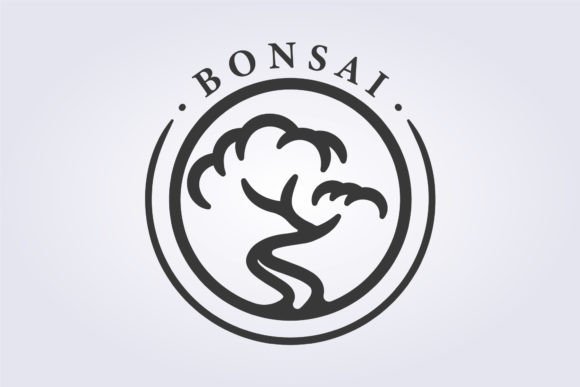
Minimalist Bonsai Line Art in Badge Logo
In a digital landscape saturated with complex graphics, bold gradients, and hyper-realistic imagery, there is a distinct advantage to stripping design down to its absolute essentials. This is where the Minimalist Bonsai Line Art in Badge Logo finds its niche. It is not merely a decorative element; it is a strategic communication tool that balances aesthetic elegance with functional clarity. For professionals, entrepreneurs, and creators seeking to convey sophistication, growth, and stability without visual noise, this specific vector illustration style offers a powerful solution.
The concept merges two distinct cultural and artistic traditions: the ancient Japanese art of bonsai and the modern utility of badge-style branding. By isolating the essential lines of a miniature tree within a circular or shield-like boundary, designers create an icon that feels both timeless and contemporary. It speaks to values such as patience, care, and natural beauty, making it particularly effective for brands that want to project reliability and organic growth.
Deconstructing the Aesthetic: Why Line Art Works
At its core, minimalist line art relies on negative space and precision. Unlike detailed botanical illustrations that require color palettes and shading to convey depth, line art uses single-weight strokes to define form. When applied to a bonsai subject, the focus shifts from the leaves to the structure—the twist of the trunk, the spread of the branches, and the balance of the canopy. This reduction forces the viewer to engage with the shape itself, creating a memorable visual imprint.
The "badge" format adds another layer of meaning. Badges have historically been used to denote authority, certification, membership, or quality assurance. By placing the bonsai line art inside a badge, the design inherits these connotations. It suggests that the entity using the logo has met a standard of excellence. Whether it is a landscaping company, a mindfulness app, or an artisanal tea brand, the badge format provides a container that makes the logo feel established and trustworthy.
Key Characteristics of the Design
- Scalability: Because the design relies on vector paths rather than pixels, it remains crisp at any size. A tiny favicon on a browser tab looks just as sharp as a large print on a business card or a storefront sign.
- Versatility: The monochromatic nature of most line art allows for easy color manipulation. A black line art badge can be inverted to white for dark mode interfaces, or colored green to emphasize the botanical theme without losing definition.
- Cultural Resonance: The bonsai tree is universally recognized as a symbol of harmony and balance. In Asian culture, it represents the connection between nature and humanity. This deep-seated symbolism adds emotional weight to the logo without needing additional text.
- Timelessness: Trends in graphic design come and go, but simple geometric shapes and clean lines tend to endure. A minimalist bonsai badge is unlikely to look dated in five or ten years, protecting the long-term value of the brand identity.
Practical Applications Across Industries
The utility of a Minimalist Bonsai Line Art in Badge Logo extends far beyond traditional gardening contexts. Its abstract yet recognizable nature allows it to be adapted for a wide array of sectors. Here is how different professionals might leverage this design asset.
Business and Entrepreneurship
For startups, particularly those in sustainability, eco-friendly products, or wellness, this logo serves as a strong foundation for brand identity. Imagine a fintech app that focuses on long-term investment growth. The bonsai, which takes years to cultivate, perfectly mirrors the philosophy of compound interest and patient capital. Placing this in a badge logo on their app icon signals to users that their money is being handled with care and foresight.
Similarly, consulting firms or coaching services can use the image to represent personal development. Just as a bonsai requires pruning and shaping to reach its potential, clients often need guidance to refine their skills and strategies. The logo becomes a visual metaphor for the service provided.
Educational and Academic Use
Educators and content creators can utilize this vector illustration for course materials, certificates, or digital badges. In online learning environments, gamification is key. Awarding a "Master Gardener" or "Sustainability Champion" badge featuring this line art gives learners a tangible sense of achievement. The clean lines ensure that the text accompanying the image remains legible even when the badge is small.
Digital and Web Design
In UI/UX design, clutter is the enemy of usability. Navigation icons and section headers benefit greatly from minimalist assets. A website for a plant shop or a botanical garden can use the bonsai line art as a recurring motif in headers, footers, or loading screens. It adds personality to the site without distracting from the primary content. Furthermore, because it is a vector file, it loads quickly, improving page speed metrics—a critical factor for SEO and user retention.
Selecting and Implementing the Right Asset
While the concept is appealing, executing it effectively requires attention to detail. Not all line art is created equal. When sourcing or commissioning a Minimalist Bonsai Line Art in Badge Logo, consider the following practical factors.
- Line Weight Consistency: Ensure that the stroke width is uniform throughout the design. Variations in line thickness can make the image look accidental rather than intentional. Consistent weights contribute to a polished, professional appearance.
- Balance and Composition: The bonsai should fill the badge appropriately. If the tree is too small, the badge will look empty and weak. If it is too large, it may clip against the edges or lose detail. The ideal composition centers the trunk while allowing the branches to interact gracefully with the circular boundary.
- Vector Format Availability: Always work with SVG or AI files. Raster images like JPEGs or PNGs will pixelate when scaled up for print materials. Vector files allow you to adjust colors, sizes, and even individual paths later, ensuring maximum flexibility for future rebranding efforts.
- Contextual Color Choices: While black and white are classic, consider how the logo will appear on different backgrounds. Green is an obvious choice for botanical themes, but it can also evoke envy or toxicity if not chosen carefully. Earth tones, deep blues, or charcoal grays can offer a more sophisticated alternative that still feels grounded.
Enhancing Brand Engagement Through Simplicity
One of the most significant benefits of using this design style is its ability to enhance user engagement through simplicity. In an era of information overload, consumers are drawn to designs that are easy to process. The brain recognizes the shape of a tree and the containment of a badge instantly, reducing cognitive load. This immediate recognition fosters trust and familiarity.
Moreover, the minimalist approach encourages creativity in application. Because the logo is uncluttered, it pairs well with various typography styles. It can sit beside bold, sans-serif fonts for a modern tech vibe, or next to elegant serifs for a luxury lifestyle brand. This adaptability means the same asset can support multiple marketing campaigns, from social media posts to packaging design, maintaining a cohesive brand voice across all touchpoints.
Ultimately, the Minimalist Bonsai Line Art in Badge Logo is more than just a pretty picture. It is a versatile, scalable, and meaningful design element that communicates values of growth, care, and stability. By understanding its characteristics and applying it strategically, professionals can elevate their visual identity, creating a lasting impression that resonates with audiences on both an aesthetic and emotional level.