Restaurant Vintage Minimalist Logo
In the competitive landscape of the food and beverage industry, visual identity serves as the primary point of contact between a brand and its consumers. For establishments aiming to convey heritage, quality, and sophistication without resorting to cluttered or overly complex designs, the Restaurant Vintage Minimalist Logo has emerged as a compelling design solution. This specific template, characterized by its geometric border featuring cutlery elements, offers a balanced approach to branding that merges retro aesthetics with modern scalability.
This article provides an objective evaluation of this design asset, exploring its technical specifications, aesthetic appeal, and practical applications. By analyzing its features and limitations, business owners, graphic designers, and marketing professionals can determine whether this template aligns with their strategic goals for a cafe, bistro, or catering service.
Understanding the Design Concept
The core concept of the Restaurant Vintage Minimalist Logo revolves around the intersection of two distinct design movements: vintage nostalgia and minimalist precision. The term "vintage" in this context does not refer to ornate, baroque, or heavily textured styles often associated with traditional heraldry. Instead, it draws upon mid-century modernism and retro labeling techniques, utilizing clean lines and structured geometry to evoke a sense of timelessness.
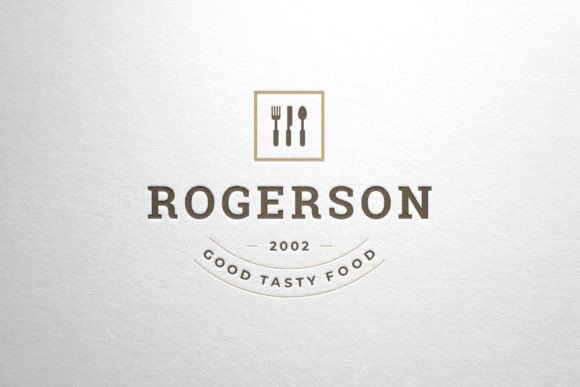
The central visual element is a geometric border composed of knife, fork, and spoon cutlery icons. These symbols are universally recognized within the culinary sector, providing immediate contextual clarity to potential customers. However, rather than depicting realistic renderings of utensils, the design abstracts these objects into sleek, vector-based shapes. This abstraction is key to the "minimalist" classification, ensuring that the logo remains legible at various sizes and maintains a premium, uncluttered appearance.
For a reader evaluating this option, it is important to recognize that this design prioritizes elegance over whimsy. It is suitable for brands that wish to project stability, tradition, and high standards of service, rather than those seeking a playful or avant-garde image.
Technical Specifications and Usability
When selecting a logo template, the ease of customization and file compatibility are critical factors. The Restaurant Vintage Minimalist Logo is distributed as a comprehensive vector package, designed to facilitate seamless editing across various professional workflows.
- Vector Scalability: The inclusion of fully editable vector files ensures that the logo can be resized from a tiny favicon on a mobile device to a large-scale billboard without any loss of quality. This is a fundamental requirement for modern digital branding.
- File Formats: The package typically includes PSD (Photoshop) and EPS (Encapsulated PostScript) files. The PSD format allows for detailed raster editing and layer management, while the EPS format, compatible with Adobe Illustrator CS2 and later versions, supports precise vector manipulation. Additionally, a JPG preview is provided for quick reference before purchase or integration.
- Color Customization: One of the significant advantages of this template is the ability to easily change colors. The use of solid vector fills allows designers to adapt the palette to match existing brand guidelines or seasonal themes. Whether a warm, earthy tone is desired for a rustic bistro or a monochromatic scheme for a sleek catering service, the color adjustments are straightforward.
- Typography Support: The template comes with a help file that includes links to download the free font used in the design. This reduces friction for users who may not have access to expensive proprietary typefaces, making the initial setup process more accessible.
Evaluating Benefits and Tradeoffs
Adopting the Restaurant Vintage Minimalist Logo involves weighing several benefits against potential limitations. Understanding these tradeoffs helps in setting realistic expectations for the final outcome.
Benefits
The primary benefit is efficiency. For small business owners or startups with limited budgets, purchasing a high-quality, pre-designed vector template is significantly more cost-effective than commissioning a custom logo from scratch. The template provides a professional foundation that requires only minor tweaks—such as text replacement and color adjustment—to become a unique brand asset.
Furthermore, the minimalist nature of the design ensures versatility. Because the design relies on simple geometric forms, it reproduces well on diverse media, including embroidered aprons, printed napkins, social media avatars, and website headers. The absence of intricate gradients or drop shadows prevents rendering issues across different print and digital platforms.
Tradeoffs and Considerations
While the template is robust, it is not without constraints. The most notable limitation is the lack of exclusivity. Since the template is available for multiple users, there is a possibility that competitors or other businesses in the same region may utilize similar design elements. To mitigate this risk, buyers must invest time in customizing the typography and color scheme to differentiate their brand.
Another consideration is the reliance on external resources. Although the help file provides links to the free font, users must ensure they comply with the licensing terms of the typeface. Additionally, the mock-ups and photos presented in the product description are for illustrative purposes only and are not included in the download. Buyers should anticipate needing their own imagery or stock photography to visualize the logo in real-world contexts.
Situational Fit: When to Choose This Template
The Restaurant Vintage Minimalist Logo is particularly well-suited for specific types of culinary enterprises. It is an ideal choice for:
- Cafes and Breweries: Establishments that focus on artisanal coffee, tea, or craft beverages often benefit from the retro-minimalist aesthetic, which suggests craftsmanship and attention to detail.
- Bistros and Fine Dining: The geometric cutlery border conveys a sense of order and refinement, making it appropriate for restaurants that emphasize classic cuisine and elegant presentation.
- Catering Services: For corporate or event caterers, a clean and professional logo instills confidence in reliability and organizational capability.
- Food Trucks and Pop-ups: Businesses that require high-visibility branding on vehicles or temporary signage will appreciate the logo's clarity and scalability.
When to Consider Alternatives
Despite its strengths, this template may not be the best fit for every scenario. If a brand aims for a highly futuristic, tech-driven, or ultra-modern image, the vintage cues in the design might feel incongruous. Similarly, if the business model relies heavily on humor, chaos, or extreme informality (such as a fast-food joint with a quirky mascot), a minimalist geometric design may appear too serious or stiff.
Additionally, businesses with strict requirements for unique intellectual property should consider investing in custom illustration services. While the template offers good value, it cannot provide the level of originality that a bespoke design process delivers.
Practical Decision-Making Insights
To make an informed decision, stakeholders should evaluate their current design resources and long-term branding strategy. If the goal is to launch a brand quickly with a polished look, and the budget is constrained, the Restaurant Vintage Minimalist Logo represents a sound investment. The availability of editable vectors and clear documentation lowers the barrier to entry for non-designers.
However, success depends on proper execution. Users should not simply upload the default template onto a website. Instead, they should treat the vector file as a starting point, experimenting with different font pairings, adjusting the spacing of the cutlery elements, and refining the color palette to ensure the final output reflects their unique brand voice. By approaching the template with a critical eye and a willingness to customize, businesses can leverage this design asset to create a memorable and professional identity.
In conclusion, the Restaurant Vintage Minimalist Logo offers a pragmatic blend of aesthetic appeal and technical utility. It caters to the needs of modern hospitality brands that value clarity, tradition, and efficiency. By understanding its capabilities and limitations, users can effectively deploy this template to enhance their market presence and communicate their brand values with precision.