Remembrance: Honoring the Past, Inspiring the Future
Remembrance is a powerful concept that goes beyond mere memory—it is an intentional act of honoring and acknowledging the past. In many cultures, it plays a central role in shaping identity, fostering unity, and preserving history. For Canada, Remembrance takes on profound significance each year on November 11th, known as War Remembrance Day or Remembrance Day. This solemn occasion is dedicated to commemorating the sacrifices made by Canadian military personnel during times of war, conflict, and peacekeeping missions.
The essence of Remembrance lies in its ability to connect people across generations. It encourages reflection on the values of courage, duty, and sacrifice, while also promoting a deeper understanding of the historical events that have shaped our world. Whether through personal gestures, community events, or national ceremonies, the act of remembering serves as a bridge between the past and present, ensuring that the lessons learned from history are not forgotten.
Challenges in Practicing Meaningful Remembrance
While the intention behind Remembrance is noble, individuals and organizations often face challenges in making their efforts truly meaningful. One common issue is the tendency for such observances to become routine or superficial. Without thoughtful engagement, Remembrance can lose its emotional weight and fail to educate or inspire.
Another challenge arises in determining the most effective ways to honor those who served. People may feel uncertain about how to participate meaningfully, especially if they lack direct family ties to military service. Additionally, there is a growing need to adapt traditional forms of Remembrance to modern contexts—particularly in digital spaces where younger generations spend much of their time.
These challenges highlight the importance of approaching Remembrance with intention and creativity. By doing so, we can ensure that our efforts resonate deeply and contribute to a lasting legacy of respect and gratitude.
Goals and Needs in Remembrance Observances
At the heart of Remembrance are several key goals. First, it seeks to preserve the stories and sacrifices of veterans and fallen soldiers. Second, it aims to educate current and future generations about the realities of war and the importance of peace. Third, it fosters a sense of national pride and unity by recognizing shared history and collective responsibility.
For communities and educators, the need is clear: to create engaging and informative experiences that encourage participation and understanding. For families, the goal may be more personal—to maintain a connection with loved ones who served and to pass down their legacy. And for designers, artists, and communicators, the challenge is to craft compelling visual and textual content that reflects the gravity and beauty of this theme.
How Remembrance Can Address These Situations
Remembrance offers a solution by transforming passive acknowledgment into active participation. When done thoughtfully, it becomes a tool for education, healing, and inspiration. For instance, schools can use Remembrance Day as an opportunity to teach students about Canadian history, the impact of war, and the value of peace. Communities can organize events that bring people together, such as wreath-laying ceremonies, candlelight vigils, or storytelling sessions featuring veterans.
In professional settings, Remembrance can serve as a platform for raising awareness and encouraging dialogue around important social issues. Businesses might choose to recognize the day by displaying symbols of Remembrance, such as poppies, or supporting initiatives that aid veterans and their families. Creatives, in particular, can leverage Remembrance as a way to produce art that honors the past while resonating with contemporary audiences.
Practical Applications of Remembrance
There are countless practical ways to incorporate Remembrance into daily life and special events. One of the most enduring symbols associated with Remembrance is the red poppy. Originating from the poem In Flanders Fields, the poppy has become a universal emblem of remembrance and hope. Wearing a poppy, donating to veteran charities, or using poppy imagery in design work are all meaningful actions.
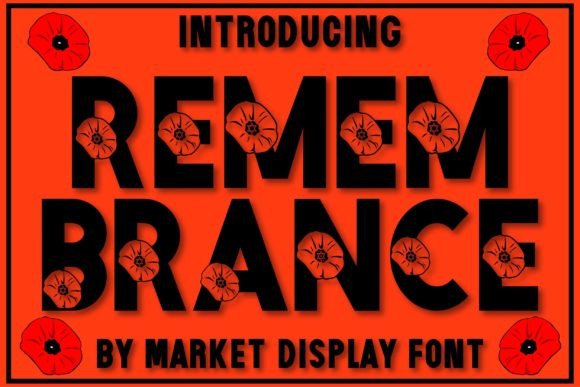
Designers looking to create impactful materials for Remembrance Day might consider using a decorative font like "Remembrance," which is uniquely styled with bold characters and intricate poppy decorations. This font captures the spirit of the occasion with elegance and reverence, making it ideal for posters, invitations, digital graphics, and educational materials. Its aesthetic appeal ensures that messages of Remembrance stand out visually, while still conveying deep respect for those being honored.
When used in print or online campaigns, the "Remembrance" font can help evoke the right tone and emotion. For example:
- Community Events: A local Remembrance Day ceremony flyer designed with the Remembrance font would immediately draw attention and communicate the event’s purpose with dignity.
- Educational Materials: Teachers can use the font in lesson plans or presentations to make history come alive for students, helping them understand the significance of the day in a more engaging way.
- Memorial Projects: Artists and designers working on tribute projects can integrate the font into signage, booklets, or even custom merchandise to support veteran causes.
Examples of Creative Remembrance Efforts
Across Canada, people express Remembrance in diverse and innovative ways. Here are some examples that illustrate how different users might approach the topic:
- Family Tributes: Families with military connections often hold private ceremonies, lighting candles or reading letters from ancestors who served. The "Remembrance" font can be used in handwritten notes or digital tributes to add a personal touch.
- Public Art Installations: Cities frequently host large-scale art displays, such as fields of poppies or illuminated memorials. Designers working on these projects might use the font in accompanying signs or promotional materials to reinforce the message of Remembrance.
- School Activities: Students can create posters, write poetry, or participate in moment-of-silence events. Using the Remembrance font can elevate the visual quality of these projects and make them more memorable.
- Digital Campaigns: Social media platforms offer new avenues for Remembrance. Organizations can post short videos, share historical facts, or run fundraising drives using the font to maintain a consistent and respectful tone.
Useful Considerations for Incorporating Remembrance
To ensure that your Remembrance efforts are both respectful and effective, keep the following considerations in mind:
- Accuracy: Verify historical facts and be mindful of the sensitivity surrounding military history and loss.
- Inclusivity: Acknowledge the contributions of all who served, including Indigenous peoples, women, and international allies.
- Accessibility: Make sure your materials are accessible to all audiences, whether through language, format, or visual elements.
- Authenticity: Avoid commercializing the occasion. Focus on genuine expressions of gratitude and reflection.
When choosing tools like the "Remembrance" font, ensure that they align with the tone and purpose of your project. The bold, decorated style of the font makes it suitable for headlines and titles but may not be appropriate for body text in formal documents. Use it strategically to highlight key phrases or messages without overwhelming the reader.
Personal and Professional Approaches to Remembrance
Individuals and professionals may approach Remembrance differently based on their roles and interests. For example:
- Veterans’ Families: May prefer quiet, intimate gatherings where they can share stories and memories. The font could be used in personalized keepsakes like photo albums or framed quotes.
- Teachers and Educators: Might seek interactive learning resources. The Remembrance font can enhance student projects, making them visually appealing and thematically cohesive.
- Graphic Designers: Could explore the font in branding for non-profit organizations focused on Remembrance or veteran support. Its unique appearance adds distinction to any design.
- Business Owners: Might use the font in store promotions, banners, or website headers to show solidarity and raise awareness among customers.
No matter the approach, the goal remains the same: to honor the past in a way that inspires action and empathy in the present. By tailoring our methods to suit our specific needs and audiences, we can make Remembrance more inclusive and impactful.
Implementing Remembrance in Your Work
If you’re interested in using the "Remembrance" font in your projects, here are a few tips for implementation:
- Choose the Right Format: Ensure the font is compatible with your design software or website builder. Most decorative fonts are available in downloadable packages for desktop use or web embedding.
- Pair Thoughtfully: Combine the Remembrance font with simpler, more readable typefaces for body text to maintain clarity and balance.
- Use Sparingly: Because of its ornate style, the font works best in small doses. Reserve it for headings, titles, or focal points where it can command attention.
- Respect Context: Always consider the cultural and historical context when using symbols or fonts related to Remembrance. Ensure your designs do not inadvertently trivialize the subject matter.
By implementing these practices, you can create designs that not only look impressive but also carry the appropriate weight and meaning. The Remembrance font is a valuable resource for anyone aiming to convey the themes of honor, gratitude, and reflection in a visually striking manner.
Why Remembrance Matters Today
As society continues to evolve, the practice of Remembrance remains vital. It reminds us of the cost of freedom and the ongoing need for compassion and understanding in global affairs. In an age where information moves quickly and attention spans are short, finding creative and effective ways to engage with Remembrance is essential.
Through thoughtful design, education, and community involvement, we can keep the spirit of Remembrance alive. The "Remembrance" font exemplifies how aesthetics can be harnessed to amplify a message of respect and honor. It is a beautiful and unique tool that helps creators connect with audiences in a meaningful way.
Whether you're planning an event, creating content, or simply seeking a way to express gratitude, incorporating Remembrance into your work can lead to powerful outcomes. It not only educates and unites but also leaves a lasting impression that honors the past while inspiring the future.